
A new mobile app from Mexican nonprofit Comunidad y Biodiversidad (COBI) co-created for and with fishers from Mexico is revolutionizing the way Latin American fisheries record their catch and learn from each other, creating a novel digital ecosystem of small-scale fisheries and the cooperatives that manage them – strengthening these fishing communities, empowering them through data, knowledge-sharing, peer learning, and economic resilience.
The app, PescaData, was officially launched in 2020 after COBI began conversations with fisheries in 2018. PescaData was born out of a simple but powerful idea: create a single tool that meets the diverse needs of fishers and fishing cooperatives, while connecting them to each other. The app is designed to improve and, at the optimal time, replace physical fishing logbooks with something more detailed, efficient, and useful, all while keeping sensitive fishing information secure.
From the beginning, the goal was to build something in close collaboration with the fishing community. The first spark came from the cooperative S.C.P.P. Ensenada in El Rosario, Baja California, who wanted a way to connect with other stakeholders across Mexico, track catches, record sales and income, and improve financial management. Through consultations with other fishing coops in Mexico, the team identified additional needs, such as data recording and community knowledge-sharing, and set out to create one app that could do it all.
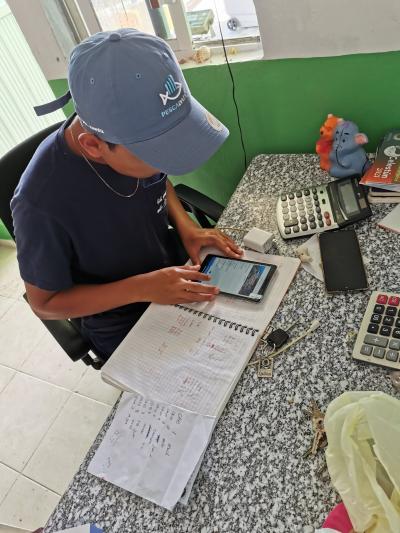
At its core, PescaData’s logbook feature allows fishers to record their trips using a phone or tablet, even without Wi-Fi. They can document catch, bycatch, bait, gear, fishing zones, fish size, costs, vessel names, and more. The information is far more detailed than what’s possible in paper logbooks, and it never gets lost. Some cooperatives invite their members to use the app so they can keep track of their own fishing trips, logbooks, and view their own data, which in turn supports fishery improvement projects (FIPs) reporting on FisheryProgress, as it is essential monitoring information of the fishery.
Beyond data logging, PescaData offers tools that strengthen fisheries from multiple angles. There’s a complete identification guide for commercial species of Latin America, with common and scientific names and photos according to the region. There’s also a growing library of what the app refers to as community-based solutions where fishing communities´members share strategies for addressing ecological, economic, and social challenges, which serves as a guide to replicate them in other regions. These solutions now number in the hundreds.
The app’s dashboard helps cooperatives track the fishing effort by the fisher and/or the fishing cooperative, which can support their own catch landscape, and the overall health of the fishery if data is shared with management government agencies. There is also an e-learning section that hosts free courses with modules on fishing sustainability, gender equality, marine refuge zones, and financial education. Fishers can connect with peers across Latin America to learn from solutions implemented elsewhere. The app also supports economic opportunities through its marketplace, where fishers can establish communication, offer and request products and services for fishing, list products for sale (from catch to vessels and equipment) as well as offer services such as consulting or fisheries monitoring.
With almost 5,000 fishing organizations registered, and 348 potential solutions posted, PescaData is in use in 39 countries and nearing 3,000 downloads. But its ability to strengthen and empower fishing communities is the most impressive aspect. This is important for fishing communities because they often face challenges like unstable incomes, limited access to markets, lack of reliable data to advocate for their needs, and vulnerability to both environmental and regulatory changes. Tools like PescaData help level the playing field—giving fishers ownership of their data, stronger networks, and better access to economic opportunities. By connecting them with resources, safety information, and each other, the app not only improves day-to-day livelihoods but also builds the collective power needed to negotiate fairer prices, influence policy, and adopt sustainable practices that protect the future of their fisheries. In short, it helps communities become more resilient, self-reliant, and better positioned to thrive in a changing world.
Its impact is already visible in a few Mexican FIPs. The Campeche finfish FIP has seen significant benefits from the use of logbooks, as fishers are now registering more comprehensive information from their trips. This data has supported better decision-making in the fishery, including changes to gear and rotating fishing sites, while also giving fishers a fuller picture of the resource. The information collected has also strengthened conversations with government agencies by showcasing the sustainability practices of participating fishers. Another key example is how the app is helping to address concerns about illegal fishing in United States waters, which has been a recent concern. The use of PescaData has been essential for documenting catches within Mexican federal jurisdiction waters, proving that they are not operating in US territory. This is a helpful and important step in preventing a potential embargo from the US that could jeopardize access to the export market.
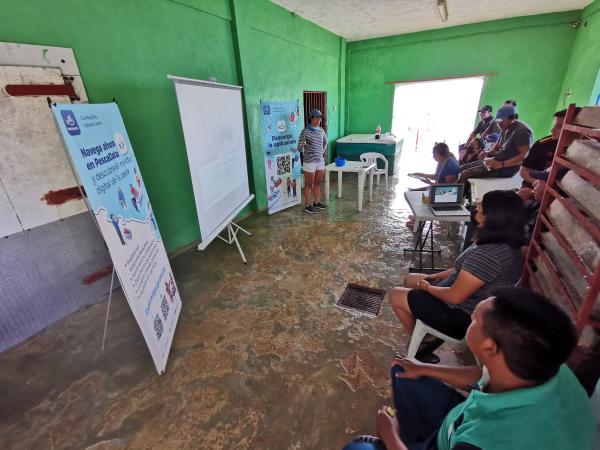
The Yucatán octopus FIP has also seen measurable benefits. When it resumed in 2021, it needed to track bait usage, which had never been documented in a consistent and detailed manner in this fishery before. There was also a growing concern that the fishery was using protected species as bait. PescaData allowed the fishers to show they weren’t using protected species, and it helped them monitor bait costs and environmental impacts. This recorded data made them aware of the impact and ultimately led to the development of artificial lures by one of the fishing cooperatives that are within the FIP. This lure proved cheaper than live bait and reduced ecosystem impacts, while preventing possible contamination of the product by decomposition of live bait, improving safety and hygiene on board as well. The solution not only improved sustainability but also helped the FIP raise its MSC score, and the fishery documented this learning experience into a solution on the app, giving other fishers the opportunity to learn from them and replicate it in other coastal communities.
"PescaData helped us identify the total seasonal expenditure on bait,” said Carlos Novelo, Yucatán octopus FIP participant and fisher from Celestún. “We saw that its price could rise independently of the octopus price, creating an unsustainable economic pressure. This motivated us to find a more viable and sustainable alternative, which led us to create artificial lures for octopus fishing."
Furthermore, the application's logbook feature provides a critical record of fishing effort, capturing not only successful outings but also days when fishing operations are halted. By systematically documenting trip cancellations due to phenomena such as recent red tide events, adverse meteorological conditions, or sudden market price collapses, PescaData generates a verifiable data trail. This record of zero-catch days or reduced effort – when cross-referenced with external data on these disruptive events – yields a clear and quantifiable assessment of their economic impact on the fishing community. For a vital resource such as octopus, this capacity to precisely correlate external disturbances with fishing activity is invaluable for evaluating the fishery's vulnerability and advocating for targeted support mechanisms, thereby ultimately strengthening its resilience to future disruptions.
Challenges remain — especially bridging the gap between younger fishers who are comfortable with technology and older generations who are less familiar — but the goal has always been to avoid multiple fragmented apps and instead create one platform that addresses a wide range of community needs. In addition, PescaData app is interoperable, which means that it can connect with other apps that are working to improve fisheries data throughout the seafood value chain.
From recording fishing trips in detail, to sharing innovative solutions, to fostering new market opportunities, PescaData is proving to be far more than a logbook. It’s a living tool shaped by the fishers who use it, with the potential to connect directly with governments to support fisheries management. As it continues to grow, the stories from Campeche, Yucatán, and beyond show just how powerful community-driven technology can be in securing the future of fisheries, all while strengthening and empowering the communities that rely upon them.
-Chase Martin
Images provided by COBI